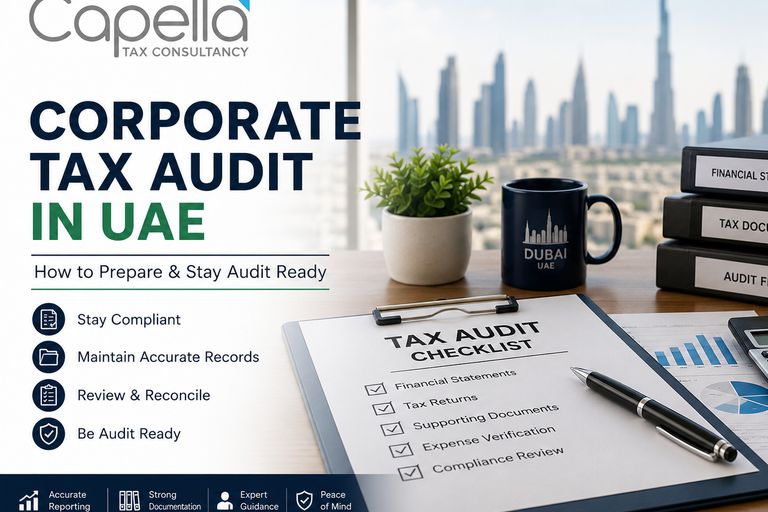

Corporate tax registration is now mandatory for many UAE businesses. This guide explains who needs to register, the documents required, common compliance mistakes, and how to stay penalty-free.
Introduction
The UAE Corporate Tax regime has introduced new compliance requirements for businesses operating across the Emirates. Companies must understand registration deadlines, filing obligations, and financial reporting requirements to avoid penalties.
Who Needs Corporate Tax Registration?
Corporate tax generally applies to a broad range of entities operating in the UAE. Businesses should assess their taxable income and compliance obligations carefully before the registration deadline.
- Mainland companies
- Free zone businesses
- SMEs and startups
- Foreign companies operating in the UAE
Documents Required
To complete corporate tax registration, businesses typically need to gather a standard set of company and identity records.
- Trade license
- Emirates ID / passport copy
- Company incorporation documents
- Financial records
- Contact details
- Authorized signatory information
Common Corporate Tax Mistakes
Businesses often run into avoidable issues during registration and filing. Many UAE business owners are increasingly seeking expert tax support to avoid manual errors and compliance risks.
- Late registration
- Poor bookkeeping
- Incorrect financial statements
- Missing documentation
- Weak tax planning
Why Professional Tax Support Matters
Working with experienced tax consultants helps businesses register accurately and stay compliant as the UAE tax system matures.
- Ensure accurate registration
- Maintain proper accounting records
- Prepare tax filings correctly
- Reduce compliance risks
- Improve financial planning
Conclusion
Corporate tax compliance is now a critical part of doing business in the UAE. Businesses that prepare early and maintain proper accounting systems can reduce risks and operate more efficiently.